
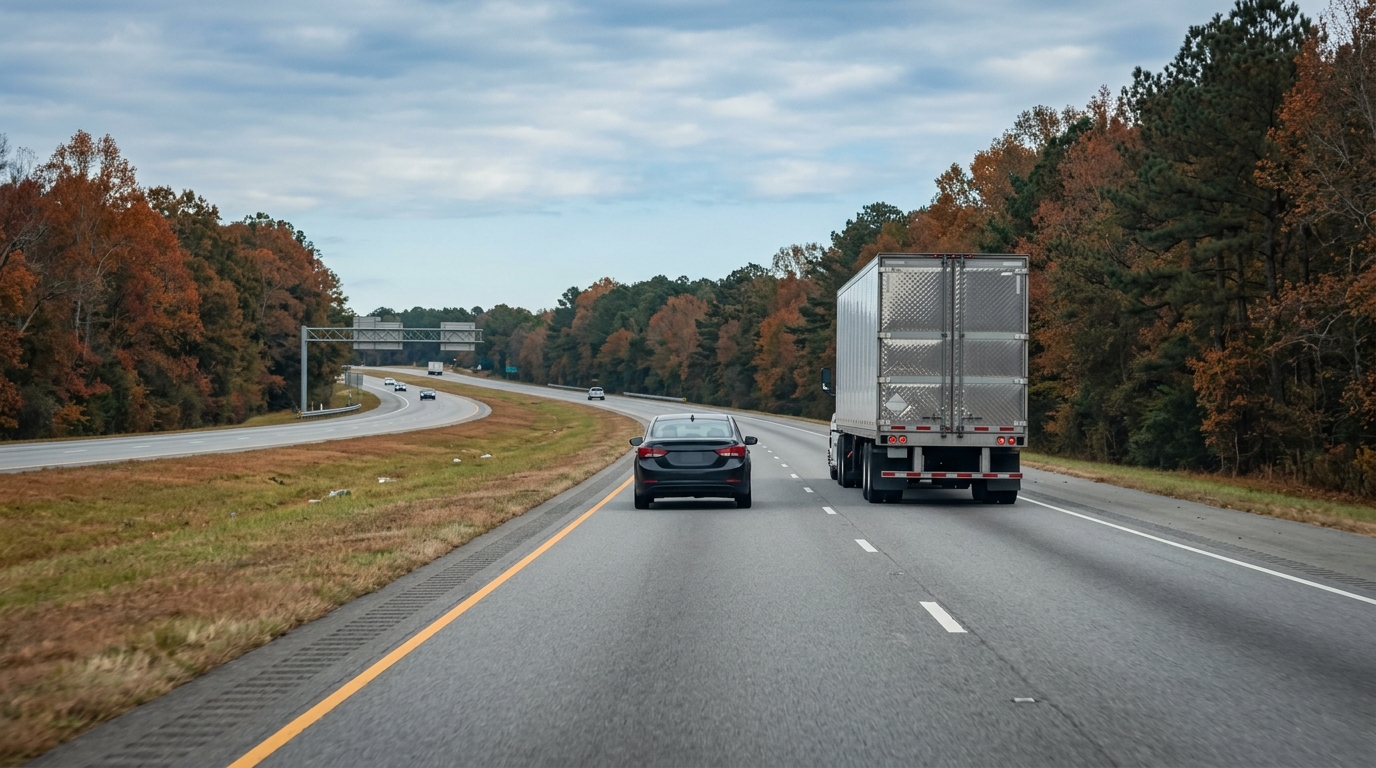
Driving Safely Around Tractor-Trailers on I-95: Blind Spots, Following Distance, and Merging
Large trucks are an essential part of life on I-95 and highways throughout Dunn and eastern North Carolina. They carry the goods communities rely on, but they also need more time and space to stop, turn, and respond to changing traffic. For drivers in passenger vehicles, understanding those limits can make everyday travel safer.
Good I-95 road safety starts with giving tractor-trailers room to operate. A few thoughtful habits—staying visible, leaving distance, and anticipating a truck’s next move—can reduce avoidable risks in busy traffic, bad weather, and low-light conditions.
Why Large Trucks Need More Space
A fully loaded tractor-trailer is much larger and heavier than a passenger car. That size affects nearly every movement it makes. Trucks generally need more distance to slow down and stop, especially when traffic changes suddenly or the road is wet. They also need extra room to complete turns without striking curbs, signs, parked vehicles, or nearby traffic.
That does not mean truck drivers should be treated as a problem on the road. Professional drivers have demanding responsibilities and must make careful decisions in changing conditions. At the same time, everyone sharing the highway benefits when passenger-vehicle drivers recognize that a truck cannot maneuver like a car.
Understand a Truck’s Blind Spots
Tractor-trailers have significant blind spots, sometimes called “no-zones,” along both sides of the vehicle, directly behind it, and in front of the cab. The blind spot on the right side can be particularly large. If you cannot see the truck driver in a side mirror, it is wise to assume the driver may not be able to see you.
Avoid lingering beside a truck. If you need to pass, do so attentively and efficiently when it is safe, then move ahead with enough room to spare. Remaining beside the trailer for an extended period can leave your vehicle out of view just when the truck needs to change lanes or adjust its position.
Pass Carefully and Leave Room Afterward
When passing a large truck, use your signal early, make the pass only when conditions allow, and avoid cutting closely in front of the cab. Moving back into the lane too soon removes the truck driver’s stopping space and may leave little time to react if traffic slows.
Before returning to the lane, look for a comfortable gap rather than the first possible opening. A clear view of the truck in your rearview mirror can be a helpful reminder that you have created meaningful space, although traffic, speed, and road conditions should always guide your decision.
Passing on the right deserves added caution. A truck may be preparing for a right turn, and the trailer can swing wide as the driver positions the vehicle. Do not assume a gap beside the truck means it is safe to continue forward. If there is any indication the truck may turn, slow down and give it room.
Give Trucks Space to Turn and Merge
Wide turns are a normal part of operating a tractor-trailer. A driver may need to move slightly left before making a right turn so the trailer can clear the corner. Avoid pulling into the space between the truck and the curb, shoulder, or intersection. That area can quickly become dangerous as the trailer tracks through the turn.
Likewise, give trucks room to merge. On I-95, entrance ramps, work zones, lane closures, and congested interchanges can require a truck to change lanes with limited options. When it is safe to do so, adjusting your speed or creating a gap can help traffic flow more predictably. Use your own signals early so nearby drivers have time to understand what you plan to do.
Leave Following Distance and Keep an Escape Route
Following too closely behind a truck makes it harder to see traffic ahead. It can also place your vehicle in a large rear blind spot. Leave ample following distance so you have time to react to braking, debris, changing lanes, or an unexpected slowdown.
As you drive, try to maintain a clear escape route. This means staying aware of the lanes and shoulders around you instead of becoming boxed in between large vehicles. If traffic begins to compress, ease off the accelerator when possible and look for space rather than waiting until a sudden maneuver is necessary.
Use Extra Care When Conditions Are Difficult
Heavy traffic, rain, darkness, and holiday travel periods all call for greater patience. Rain can reduce traction and visibility, while darkness can make it harder to judge a truck’s speed, distance, or turn signals. During high-volume travel periods, drivers may also encounter more congestion, unfamiliar motorists, and frequent lane changes.
In these conditions, increase your following distance, reduce unnecessary lane changes, keep headlights on when appropriate, and give yourself more time to reach your destination. Small adjustments can help you make safer decisions around trucks and every other vehicle on the road.
If a Truck Crash Happens
Even careful drivers can be involved in a collision. If a crash occurs, prioritize safety and seek medical attention for injuries or symptoms. Try and document your position on the roadway, always maintaining personal safety and move your vehicle to the shoulder of the road should you deem it necessary for the safety of others. Contact law enforcement so the incident can be documented. When it is safe and appropriate, preserve photographs of the scene, vehicles, road conditions, and visible damage, and collect witness contact information.
Try not to make assumptions about fault in the immediate aftermath. Truck collisions can involve many facts, including traffic conditions, vehicle positions, visibility, maintenance records, and the actions of more than one driver. A careful investigation is important.
Jones & Jones P.L.L.C. is a North Carolina personal injury law firm serving Dunn and surrounding communities. Our team understands that a collision involving a commercial truck can leave people with difficult questions about injuries, insurance, and next steps. If you need to speak with a truck accident lawyer in Dunn, North Carolina, or a personal injury attorney in North Carolina after a crash, contact Jones & Jones P.L.L.C. in Dunn at (910) 892-2184.
FAQ
Why should I avoid driving beside a tractor-trailer?
Driving alongside a truck for too long can place your vehicle in a blind spot. If the truck driver needs to change lanes or shift position, your vehicle may be harder to see. Pass attentively when safe, then create space.
How much space should I leave after passing a truck?
Leave a comfortable, visible gap before moving back into the truck’s lane. The goal is to preserve the truck driver’s ability to see your vehicle and to provide room if traffic slows unexpectedly.
What should I do when a truck is making a wide right turn?
Stay back and avoid entering the space between the truck and the curb, shoulder, or intersection. A trailer may swing through that area as the truck completes the turn.
Is it safe to pass a truck on the right?
It can be risky, particularly near intersections, exits, or places where a truck may turn or merge. Watch for signals and changes in the truck’s position, and avoid proceeding if you are uncertain about the driver’s intended movement.
When should I contact a personal injury lawyer after a truck accident?
If you have been injured or have questions after a truck collision, it may be helpful to discuss your situation with a qualified attorney. Jones & Jones P.L.L.C. provides personalized legal representation in Dunn, North Carolina. Call (910) 892-2184 to speak with our team.